
Imagine stepping into a world where your wildest dreams come to life, a place where you can explore, learn, and create without limits. This is the magic of virtual reality (VR), a powerful technology that’s transforming the way you experience the world around you.
You might be wondering, “What can virtual reality be used for? ” The answer is both fascinating and endless, and it’s something you won’t want to miss out on. Whether you’re curious about new ways to play, eager to discover innovative learning methods, or excited about groundbreaking business solutions, VR has something in store for you.
Dive into this article to uncover how VR is reshaping our reality and find out how it can add extraordinary value to your life.

Credit: etech.iec.ch
Entertainment And Gaming
Virtual reality offers a range of uses in entertainment and gaming. Players can immerse themselves in interactive worlds and experience lifelike scenarios. This technology provides new ways to enjoy games and stories, making them more engaging and realistic.
Virtual reality (VR) has transformed the way we experience entertainment and gaming. No longer confined to traditional screens, VR immerses you in worlds that feel incredibly real. Whether you’re battling dragons or exploring alien planets, VR offers an unparalleled level of engagement. Let’s dive into how VR is reshaping entertainment and gaming.
Immersive Gaming Experiences
Imagine stepping into the shoes of a legendary hero or exploring a haunted castle. VR allows you to become a part of the game, not just a player. The sensation of actually being in the game world is thrilling. It adds a new layer of excitement that traditional gaming simply can’t match. VR headsets, like the Oculus Rift or HTC Vive, make this possible. They offer motion tracking and 360-degree visuals, bringing your gaming fantasies to life. Whether you’re swinging swords or casting spells, VR makes each action feel real and impactful. Have you ever played a game where you wished you could actually be there? With VR, you can. It’s not just about playing the game; it’s about living it.
Virtual Cinematic Adventures
Imagine watching a movie where you’re not just an observer but a part of the story. Virtual reality transforms cinematic experiences by placing you in the middle of the action. You can look around, explore scenes, and interact with characters in a way that traditional films can’t offer. Directors now create VR films that take storytelling to a whole new level. You can experience the tension of a thriller or the beauty of a nature documentary from the inside. It’s like being on set with your favorite actors, feeling every emotion firsthand. How does it feel to be chased by a dinosaur or to fly through space? With VR, movies become adventures you can live, not just watch.
Interactive Theme Parks
Do you love theme parks but hate waiting in line? VR brings the thrill of roller coasters and adventure rides to your living room. Interactive VR theme parks offer you the excitement without the crowds. You can explore fantastical worlds and experience heart-pounding rides from the comfort of home. Companies like The VOID have created immersive experiences where you can battle ghosts or embark on space missions. These adventures blend virtual and physical elements for a more realistic experience. With VR, you can have theme park fun any day of the week. Wouldn’t it be amazing to explore a magical kingdom or dive deep into the ocean? VR theme parks make these dreams possible, giving you a taste of adventure anytime you want. As VR technology continues to evolve, the possibilities in entertainment and gaming are endless. What world will you explore next?
Education And Training
Virtual reality transforms education by creating immersive learning environments. Students explore complex subjects through interactive simulations. This technology enhances understanding and retention, making learning more engaging and effective.
Virtual reality (VR) is transforming the way we learn and acquire new skills. Education and training are experiencing a major shift as VR offers immersive experiences that traditional methods can’t provide. Imagine attending a class where you’re not just reading about the solar system but actually floating among the stars. Or practicing a surgical procedure without the risk, all thanks to virtual reality. Let’s delve into some exciting ways VR is reshaping education and training.
Virtual Classrooms
Virtual classrooms allow you to attend lessons from anywhere in the world. No more long commutes or crowded lecture halls. You can interact with teachers and classmates in a 3D environment that feels incredibly real. Imagine attending a history class where you can walk through ancient Rome. This kind of immersion makes learning exciting and memorable. VR ensures that education is accessible, engaging, and adaptable to different learning styles.
Skill Development Simulations
VR offers realistic simulations for skill development. Whether it’s medical training, engineering, or even retail, you can practice in a risk-free environment. For example, medical students can perform virtual surgeries. They gain experience without the fear of making real-world mistakes. This hands-on practice is invaluable for mastering complex skills. Do you remember the anxiety of your first big presentation? VR can simulate this scenario, allowing you to practice public speaking with an audience. This builds confidence and reduces fear.
Historical And Cultural Exploration
VR makes historical and cultural exploration accessible. You can explore the pyramids of Egypt or the Great Wall of China from your living room. This kind of exploration deepens your understanding of different cultures. It also fosters empathy and appreciation for diversity. Imagine experiencing a traditional Japanese tea ceremony in VR. You gain insights into customs and traditions that textbooks can’t convey. VR in education and training is more than just a trend. It’s a powerful tool that enriches learning experiences and prepares you for real-world challenges. Wouldn’t you agree that learning through experience is far more impactful than just reading about it?
Healthcare And Therapy
Virtual reality (VR) is transforming healthcare and therapy in fascinating ways. Imagine being able to train surgeons, treat mental health disorders, and aid physical rehabilitation with the help of immersive technology. It’s happening right now, and you could be part of this change.
Virtual Reality In Surgery
VR is proving invaluable in surgical training. Picture this: a surgeon can practice complex procedures in a risk-free, virtual environment before performing them in real life. This can lead to more precise and confident surgeries. Surgeons can even visualize the patient’s anatomy in 3D, improving their understanding and approach.
Would you feel safer knowing your surgeon has practiced your procedure countless times in VR? This technology allows for repeated practice without the cost or risk associated with real-life scenarios, potentially reducing mistakes. It’s like having a rehearsal before the big performance, ensuring everything goes smoothly.
Mental Health Treatment
VR is opening new avenues in mental health treatment. Consider how exposure therapy, used for phobias and PTSD, is enhanced by VR. You can safely confront your fears in a controlled virtual setting. This method provides a sense of safety while gradually building resilience.
Imagine using VR to walk through a crowded street if you’re battling social anxiety. This gradual exposure can be crucial in managing symptoms. What if you could visit calming landscapes whenever stress strikes? VR offers immersive environments to relax and meditate, helping you achieve peace.
Physical Rehabilitation
Physical rehabilitation is being revolutionized by VR. Instead of repetitive exercises, you might find yourself playing games that target specific movements. This makes rehabilitation more engaging and enjoyable. Would you prefer climbing virtual mountains instead of traditional stretching routines?
VR can track your progress and adjust difficulty levels based on your performance. This personalized approach ensures effective recovery. With VR, your rehabilitation journey becomes a dynamic and interactive experience, keeping you motivated and on track.
So, what do you think? Could VR be the key to transforming healthcare and therapy for you or someone you know?
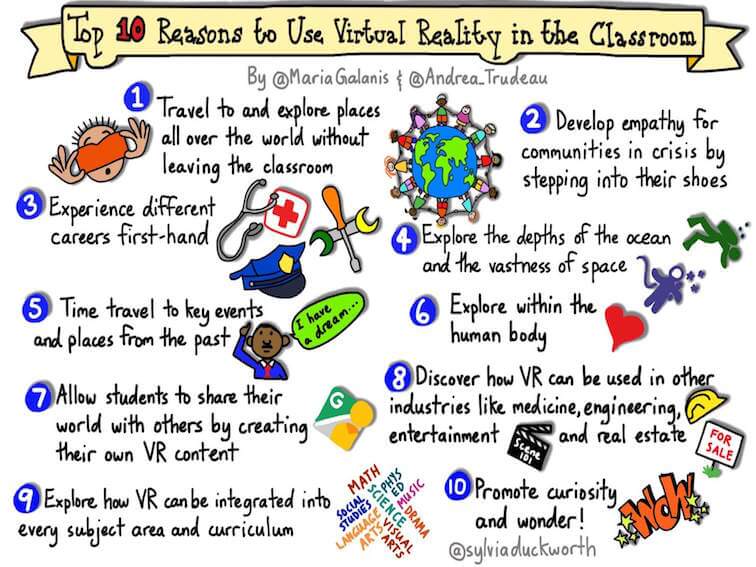
Credit: www.teachthought.com
Real Estate And Architecture
Virtual reality enhances real estate and architecture by offering immersive tours of properties and designs. Users experience spaces without physical visits, saving time and resources. Architects visualize and modify designs in 3D, improving accuracy and creativity.
Virtual reality (VR) is transforming industries, and real estate and architecture are no exception. Imagine exploring a property from the comfort of your living room or visualizing a new architectural design before a single brick is laid. VR offers exciting opportunities that are changing the way we buy homes and design buildings.
Virtual Property Tours
Have you ever wished you could walk through a potential new home without leaving your current one? Virtual property tours let you do just that. These tours allow you to experience every nook and cranny of a property in a fully immersive 3D environment. You can “walk” through the rooms, examine details, and even feel the space’s ambiance. This technology saves time and money by minimizing unnecessary travel. It also makes it easier to compare multiple properties, helping you make informed decisions.
Architectural Visualization
Visualizing a building before construction starts is crucial, and VR makes this process more intuitive. Architects and clients can “step inside” their designs and explore them in detail, seeing how light interacts with spaces or how materials look in different environments. This can lead to more accurate designs and fewer costly changes during construction. How would your dream home look during different times of the day? VR helps answer such questions, offering a more realistic perspective than traditional blueprints or 3D models.
Urban Planning Simulations
Urban planning is complex, and VR adds a new layer of depth to it. Imagine being able to simulate entire neighborhoods or cities, understanding how new developments impact traffic or community dynamics. With VR, planners can visualize the implications of their decisions, experimenting with different layouts and designs. This can lead to more effective solutions that enhance living conditions and community well-being. Could VR help make your city more livable? With its immersive simulations, urban planners can explore possibilities that were previously unimaginable. Virtual reality is not just a trend; it’s a tool that is reshaping real estate and architecture. Whether you’re exploring properties, visualizing designs, or planning urban spaces, VR offers practical benefits that are hard to ignore. So, how might VR change your next real estate venture?
Retail And E-commerce
Virtual reality enhances retail and e-commerce by offering immersive shopping experiences. Shoppers can try products virtually before buying. This technology allows brands to create engaging, interactive environments. Customers explore stores, view products in 3D, and make informed decisions.
Virtual reality (VR) has transformed how we interact with the digital world. In retail and e-commerce, it offers opportunities that were once unimaginable. With VR, shopping is no longer limited to browsing static images and descriptions. You can walk through virtual stores, engage with products, and experience them almost as tangibly as in real life. This technology has the potential to change how you shop, bringing brands and products closer to you than ever before.
Virtual Shopping Experiences
Imagine stepping into a virtual boutique from the comfort of your living room. VR shopping experiences allow you to explore aisles, examine products, and even try them on. It’s like window shopping, but better. No more guessing if that dress will fit or if those shoes match your outfit. You can see everything in 3D, making it easier to decide what to buy.
Product Demonstrations
VR allows you to see products in action. For instance, you can watch how a new blender works without stepping into a store. You can observe its features, understand its functions, and even see it in a virtual kitchen. This way, you get a feel for the product’s performance before you make a purchase. Isn’t it better to see something work than just read about it?
Personalized Customer Engagement
Imagine a store that knows you as well as your best friend does. VR can offer personalized recommendations based on your preferences and past purchases. You might receive a virtual assistant’s help, guiding you through options tailored to your style. It’s like having a personal shopper without the price tag. This level of engagement can make shopping more enjoyable and efficient. Incorporating VR into retail and e-commerce offers a fresh, dynamic way to shop. Have you ever tried VR shopping? If not, maybe it’s time to explore this new frontier.

Credit: www.chrp-india.com
Remote Work And Collaboration
In today’s digital age, remote work and collaboration have become more prevalent than ever. Virtual reality (VR) is playing a pivotal role in transforming how we connect, collaborate, and work from afar. Imagine no longer being restricted to traditional video calls but stepping into a virtual room where you and your colleagues can interact as if you were physically together.
Virtual Meetings And Conferences
Virtual meetings are no longer confined to the flat screens of our laptops. With VR, you can host or attend meetings in immersive environments. Picture sitting around a virtual conference table with colleagues from different continents. You can see them, hear them, and even interact with 3D models of projects you’re working on.
Does the idea of presenting to a virtual audience sound intriguing? VR allows you to stand on a stage, address a room full of avatars, and receive real-time feedback. It’s more engaging than traditional video calls, making your meetings feel more productive and inclusive.
Collaborative Workspaces
Imagine working in a virtual office where everyone shares the same space, regardless of where they are physically located. VR creates collaborative workspaces where you can brainstorm, share ideas, and work on projects together seamlessly. It’s like having an office without walls.
These spaces are perfect for creativity. Design teams can walk around a 3D model of their latest product, making changes on the fly. You can even have virtual whiteboards to jot down ideas and collaborate in real-time. It’s a new way to foster teamwork and innovation.
Training And Onboarding
Training new employees from a distance can be challenging. VR makes onboarding a dynamic experience. New hires can walk through virtual simulations that mimic real-world scenarios, giving them hands-on experience without leaving home.
Consider the impact of interactive training sessions. Employees can practice skills in a risk-free environment, like navigating complex machinery or handling customer interactions. This method is not only effective but also engaging, helping your team feel prepared and confident.
How can VR change the way you train your team? By providing immersive learning experiences, you’re not just telling them what to do; you’re letting them experience it firsthand.
As VR continues to evolve, its potential in remote work and collaboration is vast. Are you ready to embrace this technology and redefine how your team works together?
Tourism And Travel
Virtual reality can transform travel experiences by allowing users to explore destinations before visiting. It offers immersive tours of historical sites, museums, and landmarks from home. Travelers gain insights into cultures, enhancing trip planning and anticipation.
Virtual Reality (VR) is transforming the way we think about tourism and travel. It’s no longer just about reaching a destination but experiencing it in a whole new dimension. Imagine being able to explore far-off places without ever leaving your home. VR makes this possible, offering immersive travel experiences that can ignite your wanderlust or help you plan your next adventure.
Virtual Travel Experiences
Have you ever wished to stroll through the bustling streets of Tokyo or soak up the sun on a beach in the Maldives without packing a suitcase? VR can offer you these experiences. With a VR headset, you can explore global destinations in a 360-degree view, giving you a taste of the sights and sounds from anywhere in the world. This can be particularly beneficial for those who are unable to travel due to physical limitations or time constraints. VR travel experiences can also be a great way to relax and unwind, providing a brief escape from daily life.
Cultural Heritage Sites
Visiting cultural heritage sites can be a deeply enriching experience. However, not everyone has the opportunity to travel to these historical landmarks. VR brings these significant sites to you, allowing you to walk through ancient ruins or marvel at the intricate details of a centuries-old cathedral. Imagine stepping into the Colosseum or wandering through the ancient streets of Pompeii. VR makes it possible to experience the awe and wonder of these places without the crowds or travel expenses. This virtual access can foster a deeper appreciation for world history and culture.
Destination Previews
Planning a trip can be overwhelming with so many destinations to choose from. VR can help by offering virtual previews of potential travel spots. You can take a virtual tour of a hotel or explore the surrounding neighborhood before making any bookings. This can give you a better sense of what to expect and help you make more informed decisions. Wouldn’t it be great to know exactly what your hotel room looks like or how close it is to the beach before you arrive? These previews can enhance your travel planning process, ensuring your next trip meets your expectations. As VR continues to evolve, its role in tourism and travel will only expand. How might VR change your travel habits or the way you explore the world? The possibilities are endless, and the journey has just begun.
Social Interaction And Networking
Virtual reality transforms social interaction and networking by creating immersive experiences. People connect in shared digital spaces. These virtual environments allow users to meet, collaborate, and socialize.
Virtual reality (VR) is transforming how we connect and interact with others. It’s making social interaction and networking more immersive and engaging. Imagine attending a party with friends from around the world, all from the comfort of your home. VR offers endless possibilities for connecting with others in ways we never thought possible.
Virtual Social Platforms
Virtual social platforms are changing how we build and maintain relationships. Platforms like VRChat and AltspaceVR allow you to interact with others in 3D environments. You can create an avatar, explore virtual worlds, and meet people from different cultures. These platforms enable you to have conversations, play games, or even attend virtual meetups, making socializing more interactive and fun.
Interactive Events
VR has taken events to a whole new level. Imagine attending a concert where you’re not just a spectator but part of the experience. With VR, you can attend live events, conferences, or workshops without leaving your home. It offers a front-row seat to anyone with a VR headset, making events more accessible and engaging. Have you ever thought about networking with industry leaders or peers in a virtual setting?
Digital Communities
Digital communities in VR bring people with shared interests together. Whether it’s a book club, a gaming group, or a support network, VR makes these communities more immersive. You can join discussions, collaborate on projects, or simply hang out with like-minded individuals. Are you ready to explore how VR can enrich your social life by connecting you with people who share your passions? VR is reshaping social interaction and networking, offering new ways to connect that were once unimaginable. Its potential is vast, and its impact on our social lives is only just beginning. How will you use VR to enhance your connections and broaden your social horizons?
Military And Defense
Virtual reality enhances military training by simulating realistic battlefield scenarios. Soldiers practice tactics safely and efficiently. This technology aids in equipment familiarization, reducing risks during live operations.
Virtual Reality (VR) is transforming the military and defense sector in ways we couldn’t have imagined a few years ago. This technology offers immersive experiences that can prepare personnel for real-world challenges without the risks associated with traditional methods. Imagine you’re a soldier, stepping into a battlefield simulation so realistic that it feels like you’re truly there. VR provides this level of engagement and preparation, enhancing the skills and readiness of military personnel.
Combat Training Simulations
In combat training, realism is crucial. VR allows soldiers to practice in lifelike environments without leaving the safety of their training facility. Picture navigating through urban warfare scenarios, where you must make split-second decisions. The immersive nature of VR makes these drills feel urgent and vital, improving your decision-making skills under pressure. This technology can replicate various terrains and weather conditions. Soldiers can train in deserts, jungles, or snowy landscapes, adapting to different scenarios before ever deploying.
Strategic Planning
VR offers a unique advantage in strategic planning. Imagine you’re part of a team tasked with plotting a mission. With VR, you can visualize the battlefield, assess topography, and identify potential obstacles. This technology helps you test different strategies and see their outcomes before committing resources. It’s like having a crystal ball, providing a glimpse into possible futures. Wouldn’t you want to explore every angle and option to ensure mission success? VR makes this possible, allowing for informed and confident decision-making.
Crisis Management Exercises
Crisis management often involves scenarios that are unpredictable and chaotic. With VR, you can simulate crises and practice how to respond effectively. Imagine handling a hostage situation or a natural disaster. VR immerses you in the scene, challenging your ability to remain calm and make quick decisions. These exercises prepare you for the unexpected, honing skills that could save lives when real crises strike. The question is, are you ready to face the chaos head-on? VR’s role in military and defense is profound, offering tools that enhance training, planning, and crisis response. How might this technology continue to evolve and shape the future of military operations?
Art And Creativity
Virtual reality breathes new life into art and creativity. Artists can explore vast realms of imagination. VR opens doors to unique experiences in art creation. From virtual galleries to creative workshops, the possibilities are endless.
Virtual Art Galleries
Step into a virtual gallery and explore art without boundaries. Experience famous masterpieces up close. Wander through exhibits from your living room. VR galleries bring art to those who can’t travel. Artists showcase work to a global audience. It’s like having an art museum in your home.
Creative Workshops
VR offers dynamic workshops for artists. Learn new techniques in a virtual classroom. Engage with fellow creators from around the world. Participate in interactive sessions with experts. Share ideas in real-time without leaving home. It makes learning accessible to everyone.
Digital Art Creation
Create stunning digital art using virtual reality. Paint in 3D space with VR tools. Sculpt virtual clay and design intricate details. Immerse yourself in the creative process. Experience art creation like never before. VR transforms the way artists express themselves.
Frequently Asked Questions
What Is Virtual Reality Mainly Used For?
Virtual reality is mainly used for gaming, training simulations, virtual tours, medical applications, and immersive experiences in education and entertainment. It enhances user interaction by creating a realistic, immersive environment.
What Do You Use Virtual Reality For?
Virtual reality is used for gaming, education, training, virtual tours, therapy, and immersive storytelling experiences. It enhances learning, simulates real-life scenarios, and provides entertainment. VR helps in medical training and architectural visualization. Users explore new environments safely and engage in interactive experiences.
Is There Inappropriate Stuff On Vr?
Yes, VR can contain inappropriate content. Many platforms offer parental controls to restrict access. Always check content ratings and reviews. Parents should supervise children’s use of VR. It’s important to choose trusted platforms and content creators to ensure a safe experience.
Where Is Vr Currently Being Used?
VR is used in gaming, education, healthcare, and real estate. It enhances training, simulations, and virtual tours. Companies use it for design and collaboration. VR is popular in entertainment and retail for immersive experiences.
Conclusion
Virtual reality offers endless possibilities. Education, entertainment, and therapy all benefit. Students explore historical events vividly. Patients find relief in immersive environments. Gamers experience new worlds firsthand. Architects visualize projects in 3D. Retailers offer virtual shopping experiences. Training simulations enhance skills safely.
Virtual reality continues to grow. Technology evolves rapidly, opening more doors. Its impact touches many aspects of life. Embrace this innovation and its potential. Society can benefit from these advancements. Virtual reality is not just a trend. It’s a tool for future growth.
Keep an eye on its development. Exciting times lie ahead.