
Imagine stepping into a world where you can explore the depths of the ocean, traverse fantastical realms, or stand on the edge of a volcano—all without leaving your living room. This is the promise of virtual reality (VR), a technology that transforms the way you experience entertainment, education, and even work.
But did you know that there are different types of virtual reality, each offering unique experiences and possibilities? Understanding these variations can help you choose the right VR experience tailored to your interests and needs. Whether you’re a tech enthusiast, a gamer, or simply curious about what VR can offer, this article will guide you through the fascinating types of virtual reality that are reshaping our interaction with the digital world.
Dive in to discover which VR experience might become your next favorite escape.

Credit: www.researchgate.net
Immersive Virtual Reality
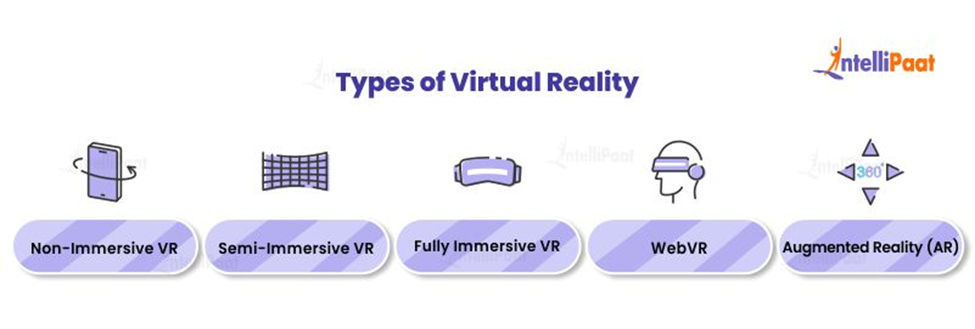
Immersive Virtual Reality comes in various forms, including non-immersive, semi-immersive, and fully immersive experiences. Non-immersive VR involves computer screens and basic interaction. Semi-immersive uses larger screens or projectors to create a more engaging environment. Fully immersive VR employs headsets and motion sensors, offering a complete virtual world experience.
Immersive Virtual Reality is where the magic truly happens in the world of VR. It transports you to another realm, making you feel like you’re physically present in a different environment. Whether you’re exploring a distant planet or walking through a museum, immersive VR provides a full sensory experience.
Full Immersion Experience
Imagine stepping into a world where you can see, hear, and interact with everything around you, just like you would in real life. This is what full immersion offers. The sights, sounds, and even the tactile sensations come together to create a believable experience. Have you ever tried walking on a tightrope? In immersive VR, not only will you see the drop below, but you’ll also feel the adrenaline rush, making your heart race. It’s all about making the virtual feel real.
Headsets And Controllers
Headsets are the gateway to these virtual worlds. They cover your eyes and ears, blocking out the real world and replacing it with the virtual one. Some popular models include the Oculus Rift and HTC Vive. These devices deliver high-quality graphics and sound to enhance the experience. Controllers act as your hands in the virtual world. They allow you to pick up objects, interact with characters, and even perform complex tasks. It’s as if you have your very own pair of hands in a digital universe.
Applications And Use Cases
Immersive VR isn’t just for gaming; its applications are vast. In education, it brings subjects to life, allowing you to explore historical events or dive deep into the human body. Imagine studying biology by walking through a beating heart. In the medical field, VR provides surgeons with simulation training, where they can practice procedures without risk. It’s an invaluable tool for improving skills and saving lives. Have you considered how VR could change your daily life? From virtual travel experiences to interactive fitness programs, the possibilities are expanding every day. Could it be the next big thing in your field?
Non-immersive Virtual Reality
Virtual Reality (VR) is an exciting field that offers a range of experiences, from fully immersive to non-immersive setups. Non-immersive Virtual Reality is a type of VR that engages users without completely enveloping them in a virtual environment. This form of VR is accessible and practical, making it a popular choice for various applications.
Desktop-based Vr
Desktop-Based VR is a common example of non-immersive VR. You interact with virtual environments through a standard computer setup. A keyboard, mouse, or joystick becomes your gateway to virtual worlds. This setup allows you to experience VR without needing expensive headsets or specialized equipment.
Imagine playing a flight simulator on your computer. You sit at your desk, seeing the cockpit on your screen, while controlling the plane with your keyboard. It’s engaging yet doesn’t require you to wear a VR headset.
Advantages Of Non-immersive Vr
Non-immersive VR is cost-effective. You don’t need to invest in high-end equipment to enjoy VR experiences. It’s accessible to nearly anyone with a computer.
This type of VR is convenient. You can easily switch between tasks, as it doesn’t require you to be fully enveloped in a virtual world. It’s perfect for multitasking environments.
Non-immersive VR offers flexibility. You can quickly adjust settings or change applications without removing cumbersome gear.
Common Industries Utilizing Non-immersive Vr
Non-immersive VR is widely used in education. Schools and universities use desktop-based VR for virtual field trips or interactive lessons. Wouldn’t it be fascinating to explore ancient ruins without leaving your classroom?
The real estate industry benefits too. Virtual tours of properties allow clients to explore homes from their computers. This saves time and provides convenience, making house hunting less stressful.
Healthcare is another sector leveraging non-immersive VR. Medical training programs utilize desktop simulations to teach students anatomy or surgical procedures. It’s a practical approach to learning complex concepts.
Non-immersive VR might not fully transport you to another world, but it certainly has its place in modern technology. Could it be the right fit for your needs?
Augmented Reality
Augmented Reality (AR) blends the digital with the real world. It enhances our surroundings with virtual elements. AR is more than just technology; it’s an experience. By overlaying digital information on physical objects, AR creates new interactions. From gaming to navigation, AR is changing how we perceive the world.
Overlaying Digital Information
AR overlays digital data onto real-world settings. This can be text, images, or interactive elements. Imagine seeing digital directions on the street, guiding you to your destination. AR apps can display information about landmarks while you view them. This integration enriches our understanding of the environment.
Devices And Platforms
Several devices support AR experiences. Smartphones and tablets are common platforms. They use cameras and screens to blend digital elements with reality. Smart glasses offer hands-free AR interactions. These devices provide seamless access to augmented content.
AR platforms include popular operating systems and apps. Android and iOS both support AR technology. Dedicated apps enhance the AR experience for users. These platforms ensure widespread access to augmented experiences.
Examples In Daily Life
AR is part of everyday activities. In retail, it allows virtual try-ons of clothes or makeup. Furniture shopping becomes easier with AR, as users can see items in their homes before buying. In education, AR creates interactive lessons, bringing subjects to life.
Navigation apps use AR to overlay directions onto real roads. Gaming apps transform environments into interactive playgrounds. These examples show AR’s practical applications in daily life.
Mixed Reality
Mixed Reality is a blend of Augmented Reality (AR) and Virtual Reality (VR). It creates a seamless experience. Users interact with digital and physical elements. This technology bridges the gap between real and virtual worlds. It enhances user engagement.
Combining Ar And Vr
Mixed Reality combines elements of AR and VR. It overlays digital information onto the real world. Users see and interact with both. It uses advanced sensors. The environment feels more immersive. Headsets enable users to experience this blend.
Interactive Environments
Mixed Reality creates interactive environments. Users can manipulate virtual objects in real space. They touch, move, and change digital elements. This interaction feels natural. It enhances learning and creativity. Users explore without restrictions.
Potential Applications
Mixed Reality has diverse applications. It aids in education and training. Users learn by interacting with realistic simulations. Healthcare professionals use it for surgery practice. Designers visualize products before making them. The possibilities are vast.
Virtual Reality For Simulation
Virtual reality for simulation includes three main types: non-immersive, semi-immersive, and fully immersive. Non-immersive uses computer screens and basic input devices. Semi-immersive employs larger screens or projectors for more realistic experiences. Fully immersive utilizes headsets and motion tracking for complete engagement.
Virtual Reality (VR) has transformed the way we simulate real-world environments, offering immersive experiences that were once confined to our imaginations. VR for simulation is a game-changer in various fields, from education to professional training. It allows users to practice skills, understand concepts, and experience scenarios in a risk-free and controlled setting. Imagine stepping into a virtual cockpit or a historical event—learning and training become not only effective but also incredibly engaging.
Training And Education
VR simulations in training and education have redefined how we learn. Picture yourself as a medical student performing a complex surgery in a virtual operating room. You can make mistakes, learn, and repeat without any real-world consequences. This hands-on approach accelerates learning, making concepts stick.
Simulation Software
The backbone of VR simulations is robust software that creates realistic virtual environments. These programs replicate everything from landscapes to machinery, enabling users to interact with the virtual world as they would in reality. Developers are constantly enhancing these tools, making simulations more lifelike and accessible.
Benefits Of Vr Simulations
VR simulations offer benefits that traditional methods can’t match. They provide a safe space to practice dangerous tasks, like firefighting or piloting an aircraft. Costs are reduced as there’s no need for physical materials or travel. Plus, the ability to repeat scenarios allows for mastery of skills at your own pace. Have you ever thought about how VR could change your learning or training experience? Could immersing yourself in a virtual world be the key to unlocking new skills? The potential is vast, and the journey is just beginning.
Credit: intellipaat.com
Social Virtual Reality
Social Virtual Reality is transforming the way we connect with others. Imagine stepping into a digital world where you can interact with friends, attend events, or even build new friendships, all from the comfort of your home. This type of VR focuses on fostering genuine social interactions, bridging the gap between physical distance and emotional connection. It’s not just about gaming anymore; it’s about creating meaningful experiences.
Virtual Communities
Virtual communities are at the heart of Social Virtual Reality. These are digital spaces where people gather to share common interests or passions. Think of them as online clubs where you can meet like-minded individuals.
Platforms like VRChat or AltspaceVR allow you to join communities focused on everything from book clubs to music festivals. You can explore diverse cultures and perspectives without leaving your living room.
Have you ever wondered how these virtual communities might change your perspective on socializing? You might find yourself more open to conversations with strangers, breaking barriers that exist in real life.
Social Interaction Tools
Social VR provides a suite of tools designed to enhance interaction. These include avatars, voice chat, and even gestures. Your avatar can be customized to reflect your personality, making you feel more connected to your digital identity.
Voice chat in VR is surprisingly immersive. You can hear someone’s voice as if they’re standing right next to you, adding a layer of realism to conversations. Gestures allow you to express yourself in ways text chat never could.
Consider how these tools might change your communication style. Could they make you more expressive, or perhaps help you overcome shyness?
Impact On Social Dynamics
Social Virtual Reality is reshaping social dynamics in unexpected ways. It encourages people to be more open and engaging, breaking down social barriers that exist offline.
In VR, physical appearance often takes a backseat, allowing personalities and ideas to shine. This can lead to more inclusive environments where everyone feels welcome.
How might this new form of interaction influence your real-life relationships? You may find yourself adopting some of the openness and inclusivity you experience in VR.
Embrace the possibilities that Social Virtual Reality offers. It’s more than just tech; it’s a new way of connecting with the world. Are you ready to dive in?
Web-based Virtual Reality
Web-Based Virtual Reality opens new doors for VR experiences. It allows users to access VR content directly through web browsers. No need for heavy installations or downloads. This ease of access is transforming how we interact with virtual worlds. It brings VR to a wider audience, making it more accessible than ever before.
Accessing Vr Through Browsers
Using a web browser for VR is simple. Open your browser and visit a VR-enabled website. With the right setup, you can dive into immersive experiences. This method saves time and space on your devices. It also reduces the technical barriers for many users.
Webvr Technologies
WebVR is a key technology driving this trend. It enables browsers to support VR content. Developers use WebVR to create engaging virtual environments. Another technology is WebXR. It combines VR and AR capabilities. These advancements make VR more versatile and user-friendly.
Challenges And Opportunities
Web-Based VR presents challenges. Compatibility issues arise with different browsers and devices. Performance can vary, impacting user experience. Yet, opportunities abound. More people can explore VR without high-end hardware. This opens up educational and training possibilities. It also invites creative applications in entertainment and marketing.

Credit: www.slideteam.net
Frequently Asked Questions
What Are The Three Types Of Virtual Reality?
The three types of virtual reality are non-immersive, semi-immersive, and fully immersive VR. Non-immersive VR uses a computer or console. Semi-immersive VR involves partial user involvement. Fully immersive VR offers a complete sensory experience using VR headsets.
What Is The Most Popular Virtual Reality Device?
The Meta Quest 2 is currently the most popular virtual reality device. It offers affordability, wireless capabilities, and a vast library of games. This device’s user-friendly experience and high-quality performance make it a favorite among VR enthusiasts. Its popularity continues to grow in the virtual reality market.
What Are The Different Types Of Reality?
Reality types include physical, virtual, augmented, and mixed reality. Physical reality is the tangible world. Virtual reality immerses users in a digital environment. Augmented reality overlays digital elements on the real world. Mixed reality blends physical and digital worlds for interactive experiences.
What Is Ar Vs Vr Vs Mr?
AR integrates digital elements into the real world. VR creates immersive, computer-generated environments. MR blends real and virtual worlds, allowing interaction between physical and digital objects.
Conclusion
Virtual reality offers diverse experiences. From gaming to education, VR has it all. Immersive, non-immersive, and augmented types provide different levels of engagement. Each type suits various needs and preferences. Understanding these types helps in choosing the best fit. Whether exploring new worlds or learning new skills, VR expands possibilities.
Technology continues to evolve, bringing more options. As VR grows, its impact on daily life increases. Embrace this exciting journey into virtual realms. Explore, learn, and enjoy the future of technology. Virtual reality truly transforms how we interact with the digital world.